Bookie's Club 870 and Detroit's Late-1970s Punk
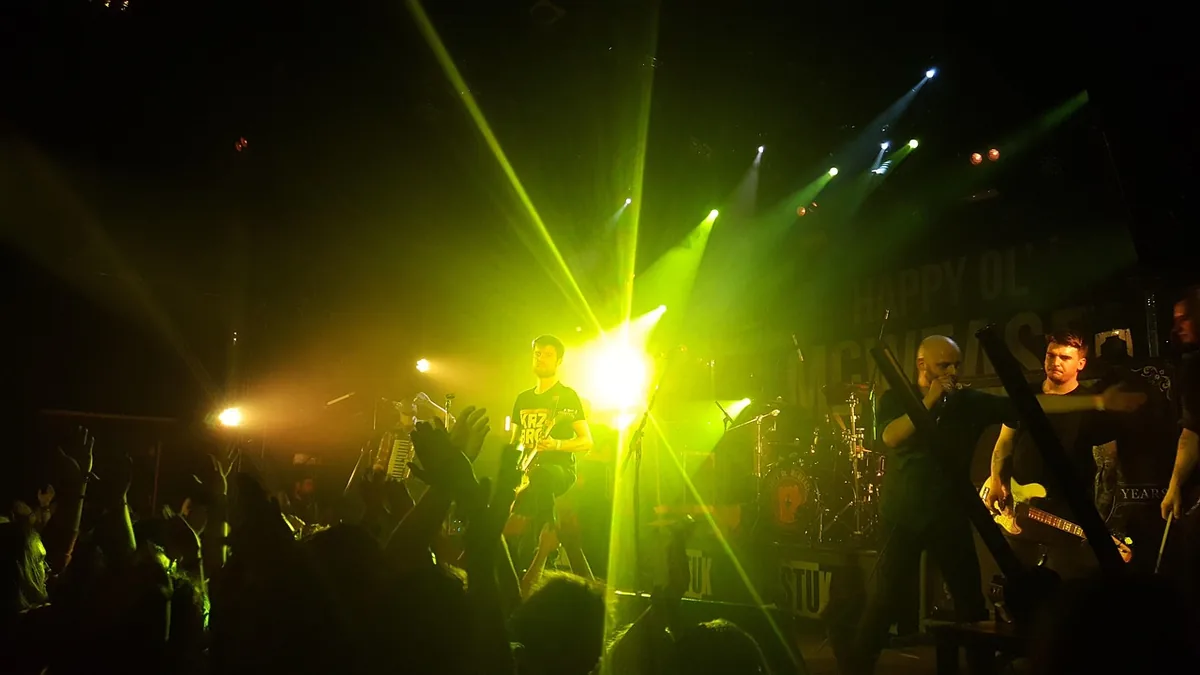
Detroit has always been a city that rewards loud, impatient music. Long before the word "punk" appeared on flyers, the MC5 and the Stooges were tearing up local stages with a physical force that later listeners would recognize as a blueprint for the whole genre. When the younger generation picked up guitars in the later 1970s, they inherited that restless energy, but they also faced a music business that had little interest in their sound. For anyone studying the story of Detroit punk rock history, the small clubs where these bands first played matter as much as the records. Among them, Bookie's Club 870 stands out as a place where a scattered community began to feel like a scene.
A City Ready for Something Louder
By the late 1970s, Detroit's economy and its streets were under visible strain. Many young people had grown up around factories, neighborhood bars, and a radio culture that favored established rock and soul. Punk offered a different route: you did not need professional training, a big budget, or access to a major studio. You needed a few chords, a cheap amplifier, and the nerve to play in front of people who might not be friendly.
That combination suited Detroit well. The city had a tradition of garage bands, basement rehearsals, and teenagers who learned by copying what they heard on the radio and then tearing it apart. New wave, with its sharper melodies and synthesizers, found an audience there too, and many local musicians moved comfortably between the two. The overlap is one reason the scene felt so alive: a single night might bring a raw hardcore-leaning act onto the same bill as a band playing tight, angular pop.
Bookie's Club 870 as a Meeting Point
A club matters most when it becomes a habit. Bookie's Club 870 worked as one of those habits for local musicians and their friends. It gave bands a place to play outside the usual rock circuit, and it gave the audience a reason to show up week after week to see what would happen next. In scenes like this, the room itself becomes a kind of network. People meet the sound engineer, the drummer from the other band, the kid who wants to start a label, and the photographer who will be there with a camera.
Clubs of this type usually did more than host shows. They helped set expectations. Musicians learned how long a set could run, how to handle a sound system that was not built for their volume, and how to win over a crowd that had come for a different act. Audiences learned to arrive early, stay late, and talk to strangers. Over time, these small habits turned a loose group of players into a recognizable local movement.
What a Club Like This Offered
When people look back at venues from this period, several contributions tend to come up again and again:
- A regular stage where new bands could test material and build a following without needing national attention.
- Mixed bills that brought punk, new wave, and related styles into the same room, encouraging cross-pollination.
- A meeting place for musicians, writers, and photographers, which made collaborations and side projects more likely.
- A visible identity that outsiders could associate with the local sound, helping the scene feel like a community rather than a set of isolated groups.
The Bands, the Sound, and the Local Identity
Detroit's punk and new wave bands rarely sounded alike, and that variety was part of their strength. Some leaned into abrasive guitar noise and fast tempos. Others favored catchy hooks, minimal arrangements, or synthesizer textures. What they shared was a refusal to imitate the polished arena rock that dominated commercial radio. Many musicians were self-taught, and that fact gave their work an immediacy that audiences responded to.
Local identity also grew from the city's history. Musicians who came up in Detroit were conscious of the MC5 and the Stooges, and they often treated those earlier bands as both an inspiration and a challenge. Being from Detroit meant carrying an expectation of intensity. A set that felt polite or careful could be dismissed quickly, so bands tended to push their performances harder, which helped make the club circuit memorable for anyone who attended.
Fanzines, Photographs, and the Paper Trail
A scene that exists mostly in person can disappear quickly once the clubs close, which is why fanzines were so important. Photocopied zines, hand-lettered flyers, and small print runs recorded show listings, interviews, band profiles, and opinions that the mainstream press ignored. For the people producing them, the work was practical as much as artistic: it spread information, connected readers across neighborhoods, and gave bands a way to reach beyond the room where they played.
Detroit-linked fanzines from this era are especially valuable to historians because they capture how participants described their own scene. The language, the arguments, and the tone of reviews reveal what mattered to the people involved. Touch and Go, which began as a fanzine and later grew into a record label, is one example of how a publication could expand into something that shaped independent music far beyond its origins. Its path shows how the same impulse that produced a zine could also produce a label, a distribution network, and a lasting archive of bands.
Photography played a similar role. Live photographs record the crowd, the stage setup, and the physical energy of a performance in a way that words cannot. Many of the most useful images from underground scenes were taken by people who were close to the community rather than working for major publications. If you are researching a club like Bookie's Club 870, look for surviving flyers, zine pages, and photographs, and pay attention to who took them, because that often reveals which networks were active.
Why the Scene Still Matters
The late-1970s punk and new wave scene in Detroit is worth studying because it shows how a music community can form without a major label, a large budget, or national radio support. Clubs provided a stage, fanzines provided a voice, and photographs provided a record. Together they created a durable local culture that influenced later bands and independent labels.
For readers who want to learn more, the most practical approach is to combine several kinds of sources: surviving zines, reminiscences from musicians and audience members, local archives, and recordings where they exist. Memories of small clubs can be incomplete or contradictory, so comparing accounts helps build a reliable picture. Bookie's Club 870 is best understood not as a single famous event but as one of the places where a generation of Detroit musicians learned that they could make their own scene.